
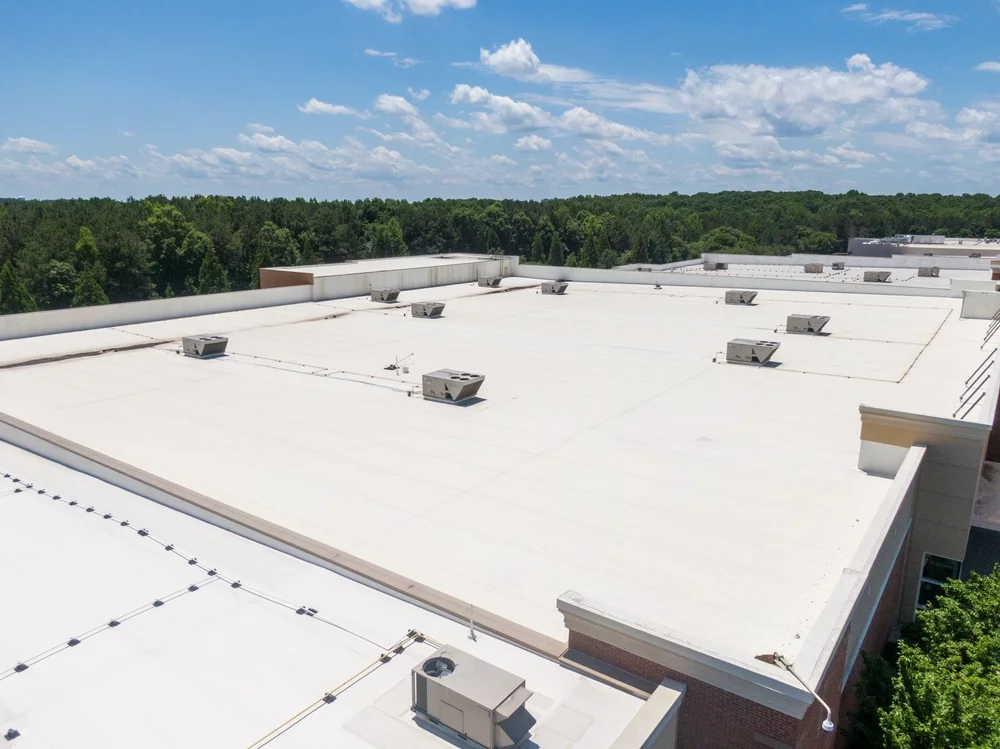
Restoration vs. Replacement: The Core Financial Differences
Understanding the true cost of commercial roof restoration versus total replacement begins with examining both the immediate financial outlay and the long-term economic impact on your facility. In the Dallas-Fort Worth commercial market, roof restoration typically costs between $3 and $7 per square foot, while total replacement ranges from $8 to $18 per square foot depending on the roofing system selected. For a standard 20,000-square-foot commercial building, this translates to $60,000 to $140,000 for restoration compared to $160,000 to $360,000 for replacement.
Beyond the base material costs, facility owners must account for labor expenses, which typically represent 40 to 50 percent of total project costs in the DFW region. Restoration projects often require fewer labor hours because existing roof systems remain largely intact, reducing removal and disposal expenses. Total replacement, however, involves tear-off costs that can add $2 to $4 per square foot, plus dumpster fees, hauling charges, and potential environmental disposal requirements for older roofing materials.
Permit fees represent another layer of expense. Most municipalities in Tarrant County require permits for both restoration and replacement work, but replacement projects typically face more stringent inspection requirements and higher permitting costs due to the structural nature of the work. These fees can range from $500 to $3,000 depending on project scope and local jurisdiction requirements.
The lifecycle cost comparison reveals an even more significant difference. A properly executed commercial roof restoration using quality roof coatings can extend roof life by 10 to 15 years, while a new roof installation typically carries a 20 to 30-year service life. When you calculate the annual cost of ownership, restoration often delivers a payback period of three to five years through reduced energy consumption and deferred capital expenditure, whereas replacement amortizes over a longer timeframe but requires a substantially larger initial investment that ties up capital reserves.
When Restoration Makes Financial Sense
Commercial roof restoration becomes the optimal financial strategy when your existing roof membrane retains structural integrity but shows surface-level deterioration, minor leaking, or reduced reflectivity. Buildings with roofs between 10 and 20 years old typically represent ideal candidates, particularly if the original installation used quality materials and proper drainage design. In White Settlement and the broader DFW area, flat and low-slope commercial roofs on warehouses, retail centers, and light industrial facilities benefit most from restoration approaches.
The financial advantage becomes clear when you examine specific scenarios. A roof with isolated ponding water issues, UV degradation, or seam separation can often be addressed through targeted commercial roof repair combined with a protective coating system for a fraction of replacement cost. This approach maintains business operations without the extensive downtime required for full tear-off and reinstallation. For retail operations and distribution centers where interruption means lost revenue, the ability to complete restoration work in phases during off-peak hours represents substantial indirect savings.
White Settlement’s climate presents unique considerations for restoration decisions. The intense summer heat in North Texas, where roof surface temperatures regularly exceed 160 degrees Fahrenheit during July and August, accelerates membrane aging and increases cooling costs. Reflective commercial roof coatings applied during restoration can reduce surface temperatures by 40 to 60 degrees, cutting air conditioning expenses by 15 to 25 percent annually. This energy savings, combined with available utility rebates for cool-roof installations, often improves the return on investment timeline to under four years.
Before committing to restoration, professional assessment using thermal imaging services provides objective data on moisture intrusion and insulation performance. Infrared scanning reveals hidden wet insulation that appears dry on the surface, allowing you to quantify the true extent of repairs needed. When thermal scans show moisture affecting less than 25 percent of the roof area and the substrate remains sound, restoration with localized repair typically delivers superior value compared to wholesale replacement. Roof coating contractors who use this diagnostic approach help facility owners avoid the costly mistake of coating over compromised sections that will fail prematurely, ensuring the restoration investment performs as expected throughout its service life.
When Total Replacement Becomes Necessary
Total roof replacement becomes the financially responsible choice when structural deterioration, extensive water damage, or repeated failure patterns compromise the building envelope beyond what restoration can address. Roofs older than 25 years, particularly those with multiple layers of patching and previous coating attempts, often reach a point where additional restoration merely postpones inevitable replacement while adding cost without proportional value. The decision threshold centers on whether the substrate and decking remain sound or require replacement to meet current building codes.
Structural indicators that mandate replacement include widespread deck deterioration, rusted or failed fasteners affecting more than 30 percent of the roof area, sagging sections indicating compromised support members, and insulation that has degraded to the point of losing R-value effectiveness. When moisture has penetrated the roof assembly and damaged the structural deck, attempting restoration creates liability issues and wastes resources on a system that cannot deliver expected service life. Professional inspections that reveal soft spots, widespread fastener pull-through, or delaminated substrate layers indicate the roof has reached the end of its useful life regardless of membrane appearance.
The DFW region’s severe weather patterns accelerate replacement timelines for commercial properties. Hail events, which occur with increasing frequency during spring months across Tarrant County, can cause catastrophic damage that renders coating or repair impractical. Storm damage that affects more than 40 percent of the roof surface typically triggers insurance claim processes where replacement provides better long-term value than extensive patchwork. Insurance carriers and roof coating contractors often recommend replacement in these scenarios because the warranty coverage on a new system outweighs the lower upfront cost of restoration that may fail within a few years.
Building code compliance represents another factor that tips the scale toward replacement. Facilities planning expansions, change of use, or major renovations may face requirements to bring the entire roof system up to current energy codes, wind uplift standards, or fire ratings. Meeting these mandates through restoration alone often proves impossible or cost-prohibitive. New construction roof installation provides the opportunity to incorporate modern drainage improvements, enhanced insulation values, and updated attachment methods that reduce long-term maintenance expenses and improve building performance. The warranty protection on a new commercial roof installation, typically 15 to 30 years depending on materials and manufacturer, provides financial certainty and budget predictability that aging, restored systems cannot match.
Hidden Costs and Long-Term Considerations
The published square-foot costs for restoration and replacement represent only the baseline investment. Facility owners who fail to account for ancillary expenses often face budget overruns that undermine the financial analysis used to select the approach. Permit and inspection fees, while mentioned earlier, vary significantly by jurisdiction. Some North Texas municipalities require multiple inspections throughout the project, each carrying separate fees. Plan review charges, temporary certificate of occupancy costs for phased work, and final inspection fees can add 3 to 5 percent to overall project costs.
Weather protection during construction represents a frequently overlooked expense, particularly for replacement projects. While restoration work can often proceed in sections with minimal disruption, total replacement requires temporary roof coverage or accelerated installation schedules to protect building contents and operations. In the DFW area, where afternoon thunderstorms arrive without warning during spring and early summer, contractors must factor in standby costs for tarping materials, emergency response crews, and potential weather delays. These contingencies typically add 5 to 8 percent to replacement budgets but are rarely included in initial estimates.
Project timeline differences create indirect costs that affect the total economic impact. Commercial roof restoration using coating systems typically completes in one to three weeks for most buildings, with work occurring during business hours or scheduled around operational needs. Total replacement projects require four to eight weeks depending on building size and complexity, during which noise, vibration, debris, and limited access affect daily operations. For retail centers, the lost revenue from customer avoidance during construction can exceed direct roofing costs. Distribution facilities may need to reduce inventory during replacement to protect goods from dust and potential water intrusion, constraining revenue capacity.
Post-project maintenance obligations differ substantially between restoration and replacement. Restored roofs using commercial roof coatings require periodic inspection and minor touch-up every three to five years to maintain warranty coverage and performance. These maintenance visits, while relatively inexpensive at $1,500 to $3,000 per occurrence, represent ongoing obligations that must appear in lifecycle cost analysis. New roof installations typically require less frequent maintenance during the first 10 years but involve higher costs when repairs become necessary due to the complexity of accessing and modifying newer systems without voiding manufacturer warranties.
Infrared thermal imaging inspection services add upfront cost to either approach but provide substantial long-term value by identifying hidden problems before they escalate. A thorough thermal scan costs $2,000 to $5,000 for most commercial buildings but can reveal moisture pockets, insulation gaps, and air leakage patterns that would otherwise go undetected until they cause visible damage. This diagnostic investment prevents the mistake of coating over wet insulation or replacing only visible damage while leaving hidden issues that will resurface within months. The data from thermal imaging also supports more accurate budgeting by quantifying the true scope of work required, eliminating the surprise costs that arise when contractors discover unexpected conditions during tear-off or preparation.
How to Make Your Decision and Get Expert Assessment
Selecting between commercial roof restoration and total replacement requires a systematic evaluation framework that accounts for both quantifiable factors and operational considerations specific to your facility. Begin by documenting your roof’s age and maintenance history. Roofs under 15 years old with minor issues typically favor restoration, while systems approaching or exceeding 25 years lean toward replacement regardless of apparent condition. Request maintenance records showing leak repairs, coating applications, and inspection findings over the past five years to identify patterns that suggest accelerating deterioration.
Assess the extent and type of damage present. Surface-level issues such as UV degradation, minor ponding, seam separation affecting less than 20 percent of total seams, and coating failure without substrate damage generally indicate restoration viability. Conversely, widespread soft spots, multiple active leak locations, failed flashing systems, and visible rust or corrosion on metal components signal the need for replacement. The key distinction lies in whether damage affects only the weatherproofing membrane or has compromised the structural layers beneath.
Budget constraints and cash flow position significantly influence the decision timeline. Restoration provides immediate cost relief and can be financed through operating budgets in many cases, making it attractive when capital reserves are committed to other facility needs. Replacement demands larger capital allocation but spreads costs over a longer service life, making it preferable when long-term ownership is certain and financing terms are favorable. Calculate both the immediate cash requirement and the annualized cost of ownership over a 20-year horizon to compare options on equal footing.
Business disruption tolerance varies by operation type and seasonal revenue patterns. Retail operations may prefer restoration’s shorter timeline and flexible scheduling, particularly if work can occur during low-traffic periods. Industrial facilities with 24-hour operations often choose replacement during scheduled shutdowns to consolidate disruption. Consider how each approach affects your specific operational rhythm and whether the timing flexibility of restoration or the finality of replacement better serves your business model.
Energy efficiency goals increasingly drive roofing decisions as utility costs rise and sustainability reporting becomes standard practice. Reflective roof coating systems applied during restoration can deliver immediate energy savings that improve operating margins and support environmental objectives. Replacement allows for enhanced insulation upgrades and modern drainage design that optimize long-term performance but requires patience for returns to accumulate over years rather than months.
Professional roof assessment provides the objective foundation for confident decision-making. A thorough evaluation should include visual inspection of all roof areas, documentation of existing conditions with photography, core sampling to assess substrate and insulation integrity, and thermal imaging to detect hidden moisture and heat loss. This diagnostic process typically requires three to four hours for most commercial buildings and produces a detailed report quantifying repair needs, remaining service life, and cost projections for both restoration and replacement scenarios.
Contact us for a free roof assessment that includes infrared thermal imaging and a detailed analysis of your options. Our team evaluates your specific building conditions, operational requirements, and budget parameters to provide clear recommendations backed by objective data. We help White Settlement facility owners make informed decisions that protect their investment while supporting business continuity and long-term financial performance.